(This one's feeling a little cramped on smaller screens.)
Please switch to a larger screen to view this case study.
How Gamification Became a Revenue Growth Engine

TravelTriangle's Agent Product · B2B2C
How Gamification Became a Revenue Growth Engine
1
Activation-to-Conversion Rate Doubled
Reflecting higher user engagement and reduced friction in lead conversion
2
Agent Conversion Improved by 15–25%
A leading indicator of stronger revenue performance
3
Dashboard Adoption Increased by 33%
Evidence of stronger adoption and reduced process ambiguity
Greatest Revenue Impact
The Context
About
Product: Travel Agent Product, TravelTriangle
Role: Product Designer (Initiated and drove the project end-to-end, alongside the product owner)
TravelTriangle connects travellers and agents with the brand’s holiday products through a three-sided marketplace for customised holidays.
The Challenge
An inefficient travel agent ecosystem was slowing growth and hurting the customer experience.
High consultant churn weakened retention at the agency level
Low consultant motivation limited performance
A poor dashboard shifted engagement offline, reducing service quality
The Initiatives & Results
Lead Progress Module
(Built ABILITY for gamification)
2x
Activation-to-Conversion
33%
Rise in dashboard usage
Notification Triggers
(Contextual PROMPTS)
220%
Increase in reminder usage
15-25%
Agency-level conversion improvement
Campaigns & Leaderboards
(Consistent MOTIVATION)
40 bps
Rise in monthly net earnings
>20%
Increase in daily active users
Project 01 · Lead Progress Module

A 5-Milestone System into a Clear, Trackable Journey
Standardised key agent behaviours and made progress visible.
Defined sales lead stages as the foundation for a reward point system.
Connected offline actions to the digital experience through better usability and targeted incentives.
Each stage starts locked, with agents progressing by completing specific actions. This reduces inconsistencies in self-reported activity while giving us a clearer view of agent behaviour.
It also created the infrastructure for a system that rewarded desired behaviours and discouraged the rest.
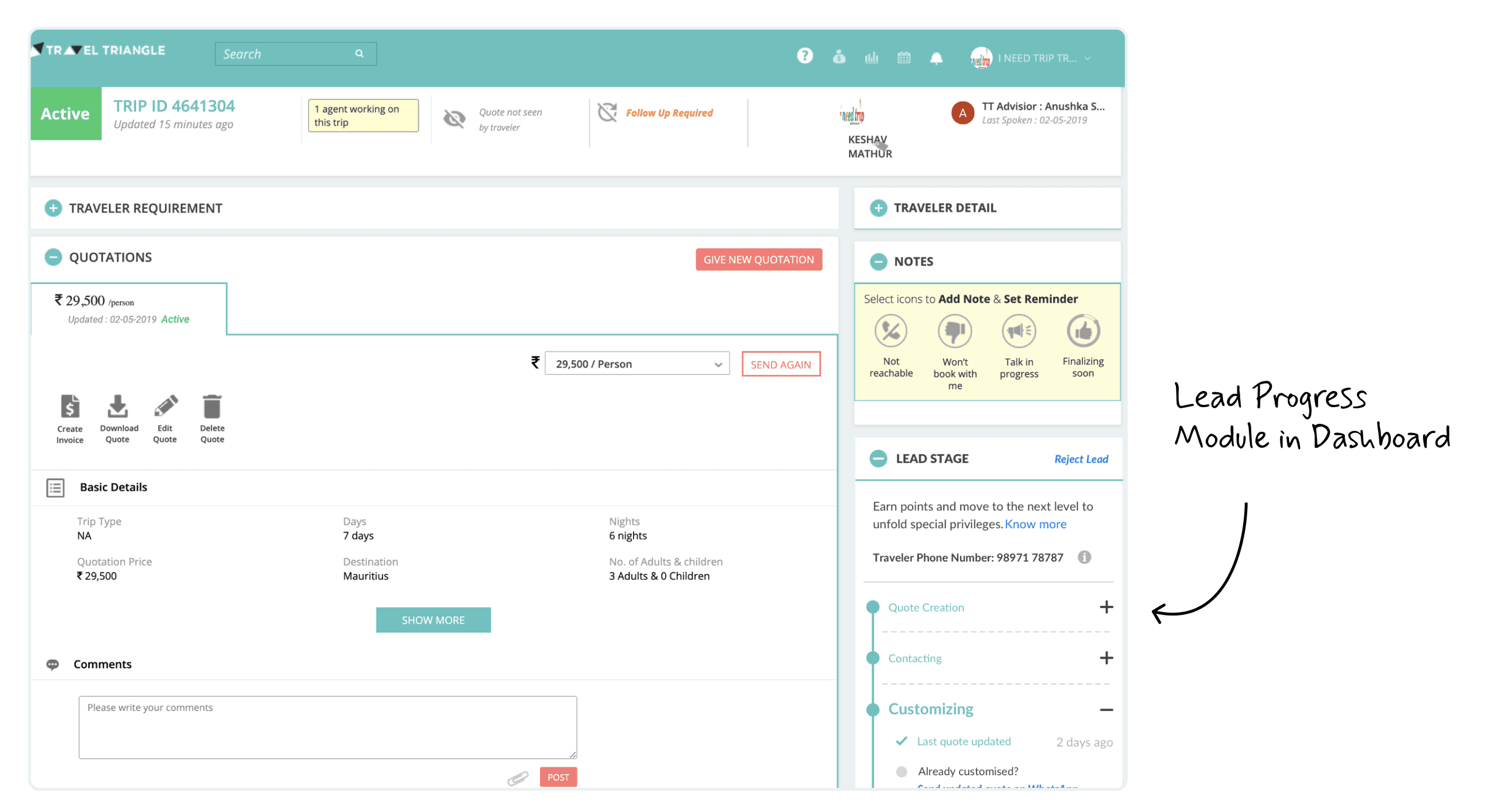
Structured Implementation
The first project built the foundation for gamification, not gamification itself, focusing first on familiarity and behaviour change before adding external incentives.
The existing dashboard remained unchanged to isolate the impact of the new behaviour system.
From Unstructured Leads to a Guided Process: An Example
Previously, agents received leads and customer details immediately, often resulting in rushed calls and generic quotes that hurt lead quality and customer experience.
The new flow:
Engage with intent: Customer contact details are revealed only after they show interest in the quote.
Prepare before contacting: Agents first understand the requirement and prepare a relevant quote.
Designed for efficiency: Agents can quickly reuse relevant quotes instead of creating them from scratch
Work faster, with better quality: A more organised workflow improves efficiency while reducing random outreach.
The result: better lead quality, faster execution, and a more considered customer experience.
Previously, agents received leads and customer details immediately, often resulting in rushed calls and generic quotes that hurt lead quality and customer experience.
The new flow:
Engage with intent: Customer contact details are revealed only after they show interest in the quote.
Prepare before contacting: Agents first understand the requirement and prepare a relevant quote.
Designed for efficiency: Agents can quickly reuse relevant quotes instead of creating them from scratch
Work faster, with better quality: A more organised workflow improves efficiency while reducing random outreach.
The result: better lead quality, faster execution, and a more considered customer experience.

Through the Stages of Lead Progress Module


The Module as a Foundation for Game Mechanics
Time: Encourage agents to act within defined time windows.
Decision-making: Prompt agents to make quick, informed choices at key stages.
Progression: Use a sequence of steps to create a sense of advancement and momentum.
Knowledge: Reward agents for applying their understanding of customer requirements and product knowledge.
Problem-solving: Introduce situations that require agents to think through the best response or action.
Resource management: Encourage agents to reuse, prioritise, and optimise existing quotes and resources.
Time: Encourage agents to act within defined time windows.
Decision-making: Prompt agents to make quick, informed choices at key stages.
Progression: Use a sequence of steps to create a sense of advancement and momentum.
Knowledge: Reward agents for applying their understanding of customer requirements and product knowledge.
Problem-solving: Introduce situations that require agents to think through the best response or action.
Resource management: Encourage agents to reuse, prioritise, and optimise existing quotes and resources.
Business Impact (Project 1)
2x
Activation-to-Conversion
33%
Rise in dashboard usage
Brought offline agent workflows into the product, making previously invisible activity trackable.
Standardised lead handling through a mandatory, step-by-step workflow.
Unified agent behaviour and communication with predefined actions and messages.
Improved visibility into agent performance by capturing activity and drop-offs in the system.
Increased dashboard adoption by making the product more useful and harder to bypass.
Lead metrics showed a significant increase in notes created per agent


Project 02 · Notifications That Prompt Action
Improving Sales Productivity at Scale
Holiday sales typically run for weeks, with multiple clients. To improve follow-ups and productivity, the reminder system needed to be streamlined.
The new reminder experience was structured around three clear states:
Upcoming · Dismissed · Missed
It integrated reminders through timely prompts, contextual notifications, and persistent visibility:
Global prompts that required manual dismissal
Contextual prompts that stayed visible for a defined duration
Bell notifications with distinct icons for upcoming and missed reminders
A dedicated Reminders tab on the Quote Follow-up page, organised by date
Email alerts sent ahead of upcoming reminders and for missed follow-ups

Every reminder appears as a timed toast, with an animated progress bar indicating the time remaining before it closes. Users can open the lead to act or snooze the reminder to avoid missing it.

When multiple reminders arrive, up to three are stacked and displayed in the dashboard, while additional reminders remain hidden to avoid clutter.

Reminders appear in the notification centre alongside other communications, with status shown through icons.

A System Design Handling Live, Snoozed, Missed, and Completed Reminders
Reminders became harder to miss, easier to manage, and more closely integrated into consultants' daily workflow. We defined how reminders behaved over time, in response to user actions, and across product surfaces.
Business Impact (Project 2)
220%
Increase in reminder usage
15-25%
Agency-level conversion improvement
Project 03 · Campaign Design & Gamification


Each campaign established a clear behavioural framework through participation criteria, deadlines, rules and rewards. Making performance visible to peers introduced competition as an additional motivation to engage and sell.
A System That Aligns Engagement with User and Business Goals
Research uncovered distinct intrinsic drivers across agency owners and travel consultants, shaping a progression from low-barrier games to advanced challenges.
The Level Progression
Learning
Introduction & onboardingAdoption
Habit building with no competitionEngagement
Boosting confidenceProductivity
Facing challenges and making progressAutomation
Highest competition and hardest challengesMastery
Thinking about starting their own business
Original Thinking
Designing the Right Progression to Keep it Engaging.
Too much difficulty frustrates beginners; too little bores experts.
Initial use: Easy to learn and get started.
Extended use: Harder to master, with enough depth to sustain engagement.
At its core, the approach combined First Principles Thinking with the following principles.
Create Meaning: Give users a reason to care.
Build Habits: Shape behaviour through repeated cues and actions.
Communicate Clearly: Remove friction and create clarity.

The challenge is not simply making the levels difficult. It is making it easy to enter, meaningful to progress through, and rewarding to master.

Designing Levels Around Business Objectives
The goal was to turn a curious agent into a master salesperson, capable of converting 21+ leads monthly.
As successful consultants grow, many start their own travel agencies, creating the next generation of partners.
At the agency level, a separate progression system maps agency aspirations, forming the basis of an agency loyalty programme.
Business Impact (Project 3)
40 bps
Rise in monthly net earnings
>20%
Increase in daily active users
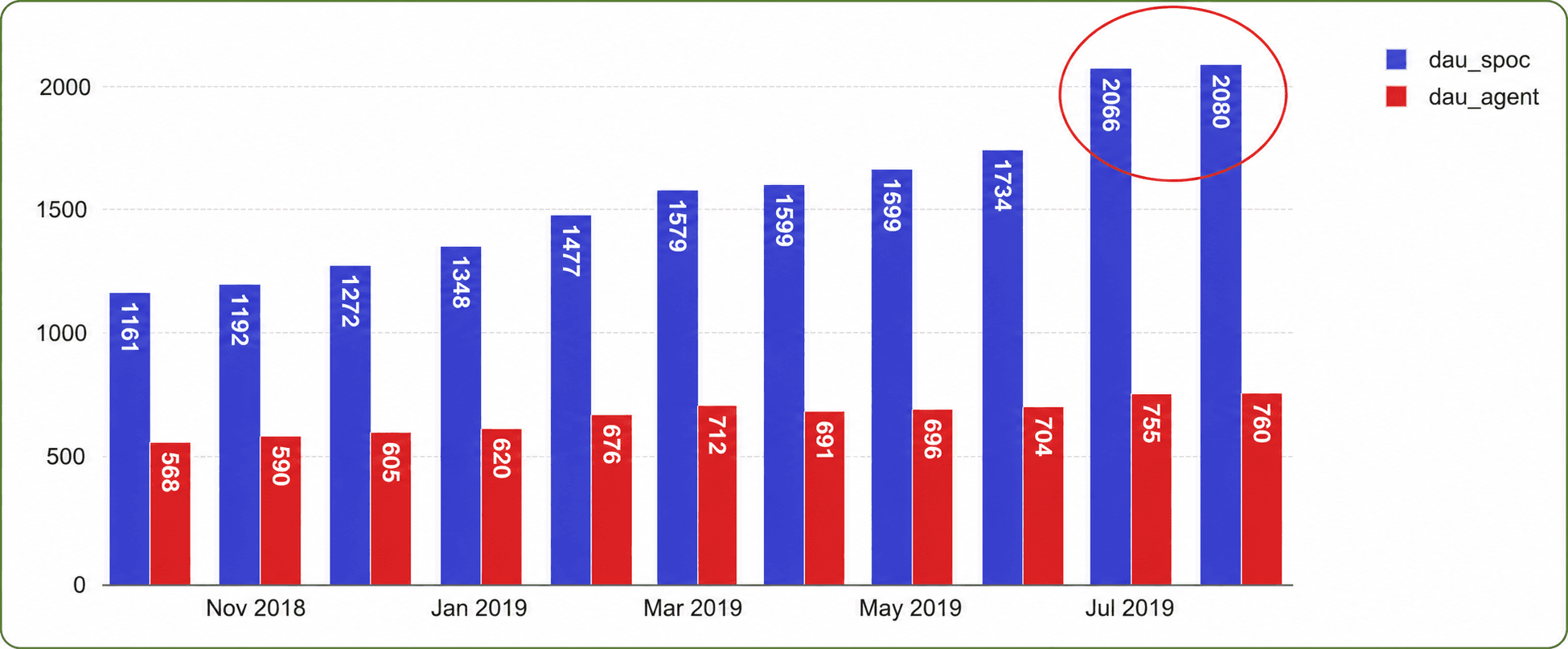

As more travel consultants became productive, the impact was clear in the spike in net revenue. But revenue was only part of the story. The following months also saw more timely advance payments and a sharp decline in payment-related escalations.
Annexure
User research
User Research Was Key to Unearthing Core Motivations

Incentivised surveys across geographies explored attitudes, motivations, personalities, and shared traits, guiding in-person discussions to uncover the reasons behind behavioural patterns.

The research synthesis linked business challenges to agent motivations, mapping strategic and operational challenges against them.


Going deep into gamification and behavioural psychology gave me a new lens to understand what drives travel agents.
Extending Gamification Into Enterprise Loyalty
As performance improved, top-performing agencies gained access to more lucrative programmes, creating a progression that encouraged sustained engagement and long-term loyalty.


Gamification was the means, not the goal