Sorry! this case study isn't available on mobile yet.
Switch to desktop to continue.
Byju's Classes
3 reasons this is the story I tell about ownership.
1
The Problem was Unprecedented.
COVID-19 caught both EdTechs and users unprepared.
2
I Inherited a UX crisis to lead.
With a failed initial version and falling retention, had zero room to underdeliver.
3
Scale I didn't see coming.
Had to build a large team fast and adapt new processes on the fly.
Most significant organizational impact.
THE CONTEXT
2020: COVID-19 broke
the education model overnight.
When the initial version failed, the team was blindsided, with no lead time and nothing to fall back on.
The goal was to build a live tuition platform for students across India. And the tools built for corporate meetings just weren't cutting it. They didn't hold a student's attention or get them to engage.
Products SHIPPED
new synchronous
learning platform experience
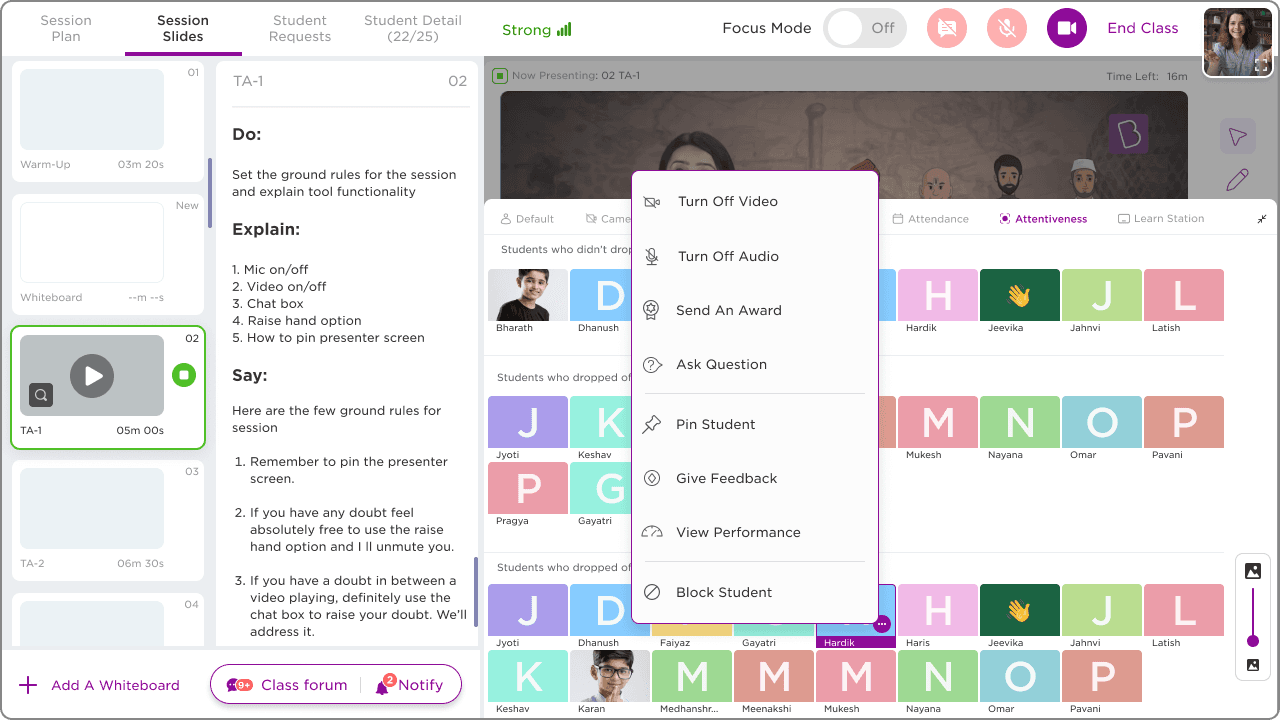
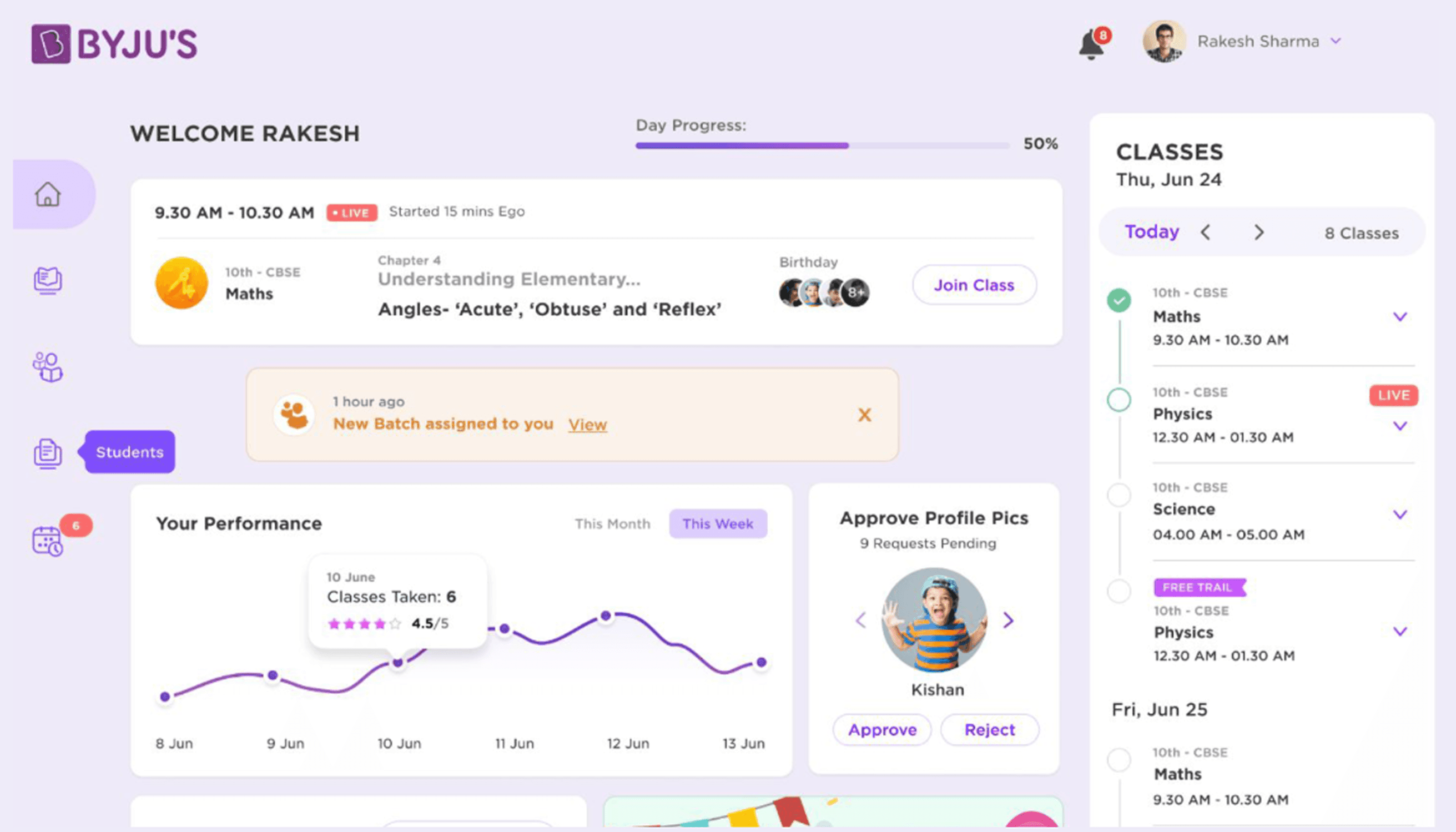
Live classroom with interactive whiteboards, quizzes, and dashboards for students.
Real-time classroom tools, and dashboards for tutors.
Tutor management console, analytics, and resource optimisation for admin.
Content management system (CMS) for pedagogy team.
The result
This became the most successful product for BYJU'S
with over 100k+ students within a year.
Attendance improved by +19 pts
(Best-performing cohort)

Non atendees reduced by 45.2%
(From 43% to 23%)
Watch time improved by +33 pts
(Across all sessions)

Watch time loss reduced by 48.5%
(From 68% to 35%)
Reduced mid-class exits
(Within the first 10 minutes)
Drop-off in the first ten minutes of class used to be high. The new product experience brought that down to near zero.
NPS also moved from negative to neutral.
Service was scaled to 4k+ sessions per day.
This Is Where It Began

The students' view of the product's early version.
The inherited initial version.
The pilot live-streamed pre-recorded videos, teaching concepts through whiteboards and animated content, with no pause or playback. Live support responded to doubts via chat, with no other means for participants to interact. Basic quizzes were built into the chat to test engagement.
Signals of Friction.
Chat product was basic, premature, and distracting.
Offensive language went unmoderated.
No playback controls (pause/replay).
Disabling chat by tutors to focus on the video caused a complete communication blackout.
No system for post-class study materials or notes.
There was no tracking of doubts asked or resolved.
The Rebuild Process
Tracing the Bottleneck, Customer-Backward.
Solving for students' willingness to participate was the one problem that mattered most.
Parents turned to BYJU'S because school-led remote learning was falling short, and its polished videos seemed like the answer. But that assumption missed something important: schools had already moved classes onto GMeet and Zoom. Kids weren't short on online content; they were short on appetite for more of it.

Diagnosing the gap between end-user motivation and business goals.

The Foundation of the New Experience.
Once the bottleneck and the north star were defined, the path became clear. Rather than relying on intuition alone, I drew from established research and literature to understand the principles behind engaging play. I translated those insights into the product, making design decisions grounded in evidence instead of guesswork.
Decoding the elements of 'PLAY'.
Social Interaction: Icebreakers, casual games, and non-curricular activities to foster peer connections.
Recognition: Rewards and badges to encourage positive behaviours through playful gamification.
Relationships: Voluntary peer connections beyond the classroom to build stronger bonds and improve learning outcomes.
Learning: Tools like interactive whiteboards, digital study groups, and productivity features to support deeper learning.
Competence: Support for skill development, peer mentoring, feedback loops, and digital well-being to build confidence and self-awareness.
Ease of Use &Delight: An intuitive, engaging interface designed to focus users on their goals and make learning time-efficient.
From Insight to Idea: Shaping the New Product.
Remote work wasn't the plan. Turns out, it was the unlock.
COVID-19 forced an unplanned transition to remote work, and it paid off. The virtual whiteboard did more than help us document our process. It gave people room to contribute without hesitation, recreating the open, collaborative energy of a classroom. We kept what worked and let go of what didn't.

The team ideated freely, with no restrictions, to build the best experience under each of the six design outcomes.
The Strategic Shift

Two-teacher model for all regular classes with 1:20 teacher student ratio.
A new model, shaped by a bigger vision.
The redesign transformed the product and the service.
The new product introduced a dedicated tutor for a permanent batch of 20 students, providing real-time doubt resolution, assessments, and personalised support. Meanwhile, Star Teachers focused on delivering concepts through engaging visualisations and animations.

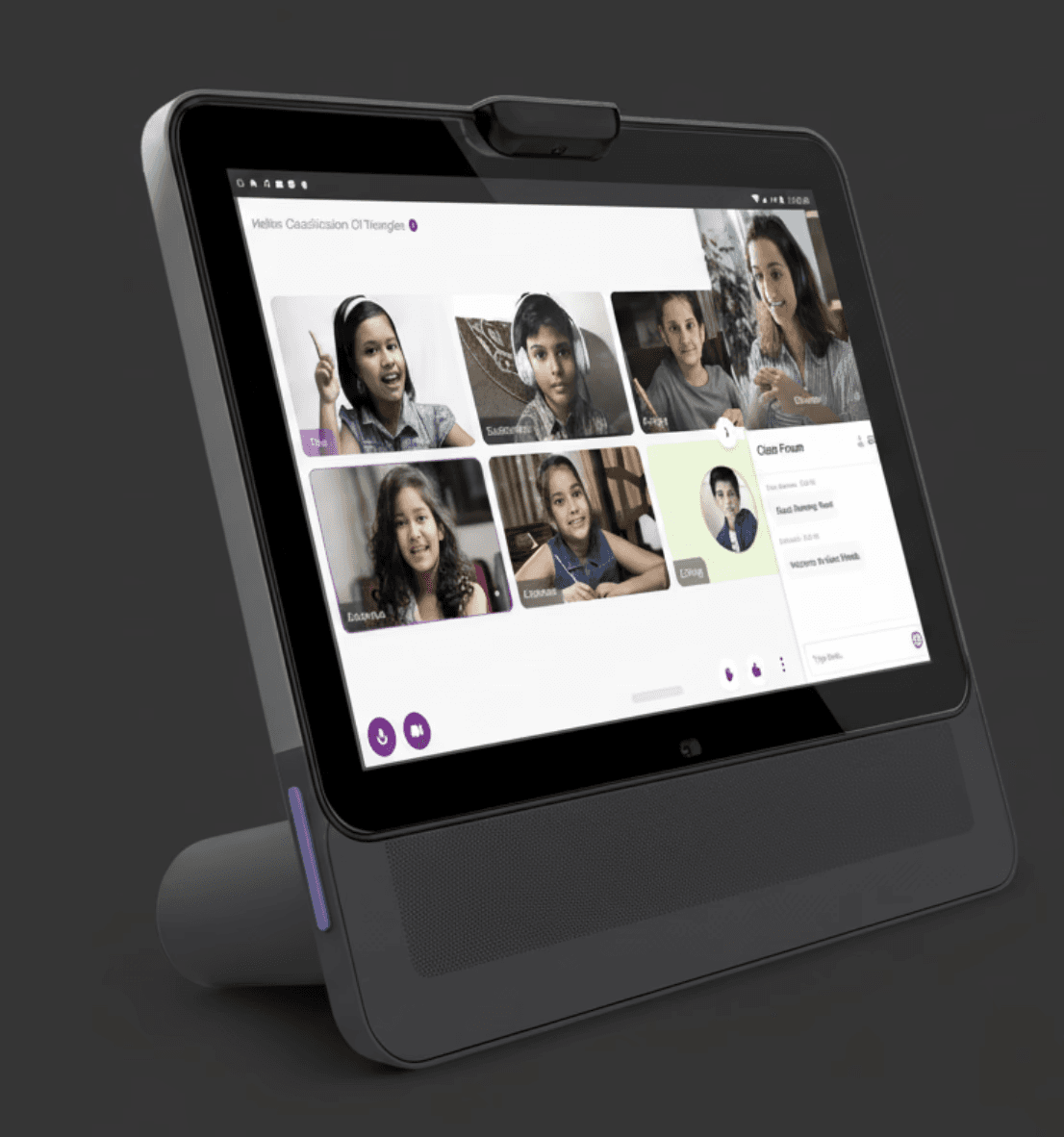
The classroom experience was designed to support three learning models: batches of 20, 100, and 1000+ students (mega-classes).
The friction that earned me the seat at the table.
My mandate was to refine the existing product and make it more engaging. Instead, I found myself questioning whether the product itself was solving the right problem.
Questioning the product's direction required more than conviction. It required proof.
The evidence I collected from customer complaint calls, product audits, and field insights was compelling enough to justify challenging the existing direction.
The proposal met considerable resistance, but the strength of the evidence made the case impossible to ignore. It was eventually approved, and the product pivot became the company's new direction.

The multi-layered product and service ecosystem that enabled BYJU'S Classes to run the world's largest online tuition classes.
The structure & layout design
A rebuild inspired by users' mental models.
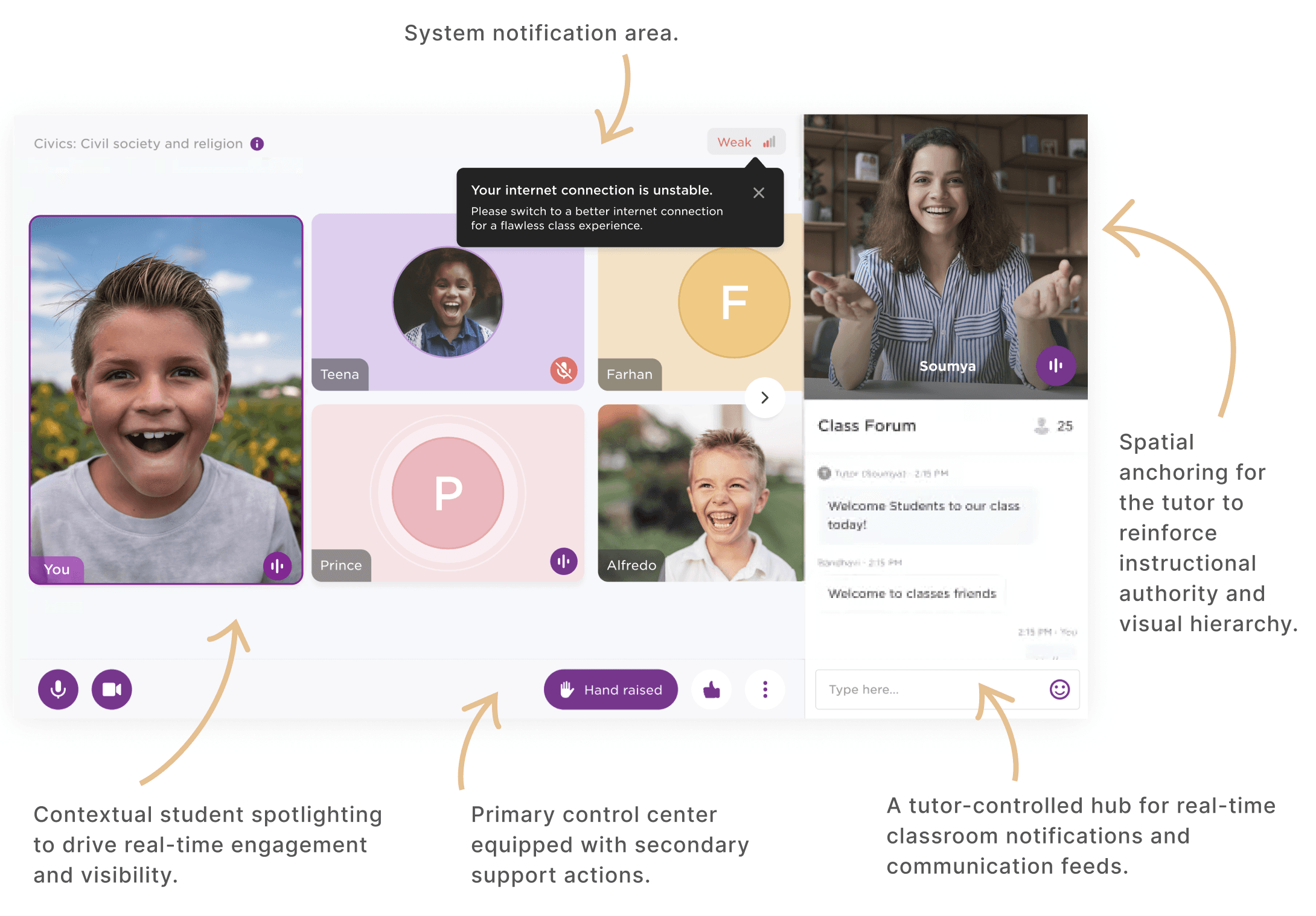

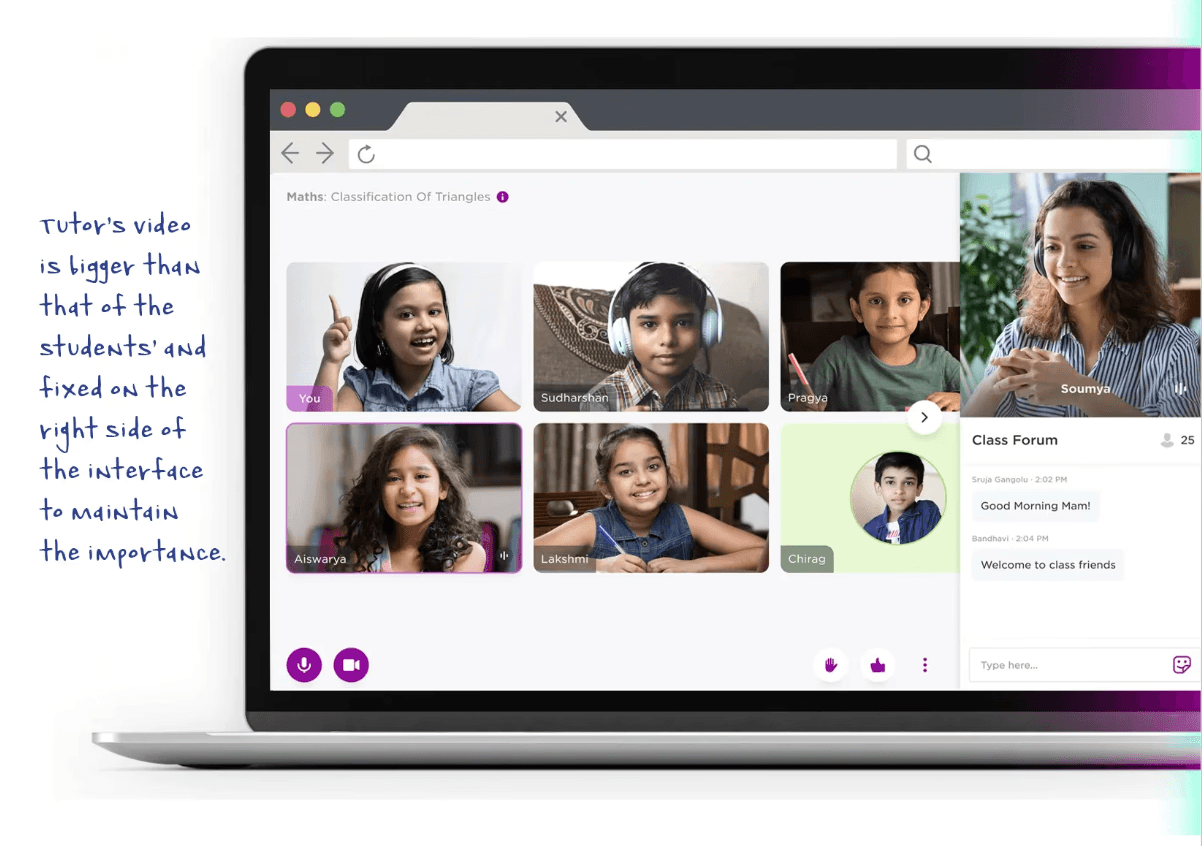
The traditional classroom gave teachers a clear position of authority.
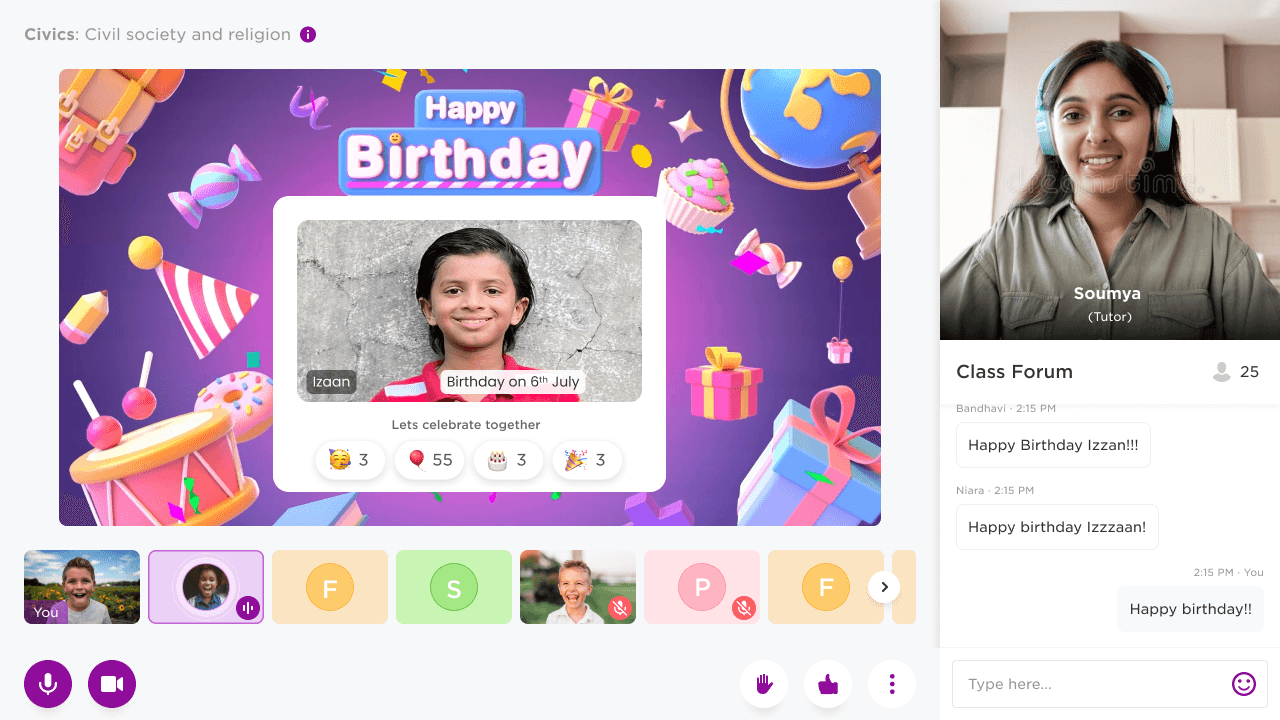
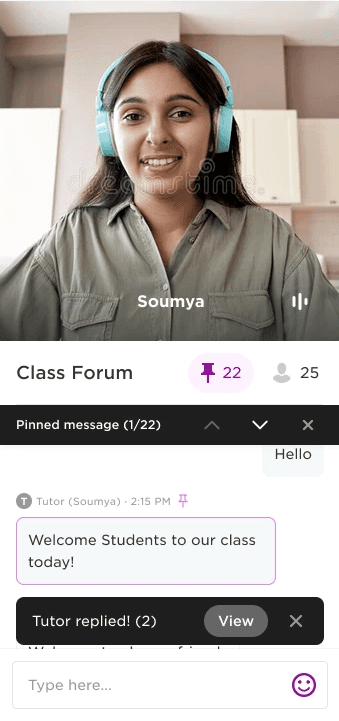
It inspired a permanent video tile for the tutor, visible to every student throughout the session.

Classroom corridors foster relationships beyond the lesson.
This inspired a pre-classroom space with games and activities that brought students together.

Students are often called to the front of the classroom, which shifts the hierarchy and puts them in the spotlight.
This inspired features that let teachers bring students into the spotlight during online classes.

Birthday celebrations are an integral part of every school experience.
We made them a priority from the start to make online classrooms feel more joyful and memorable.
Corporate remote meeting tools were never built for classrooms. Their limitations became clear as learning moved online, prompting us to build a custom platform designed for students and teachers. It kept the experience simple and functional, while making learning engaging and fun.
Product Screens & Visuals.
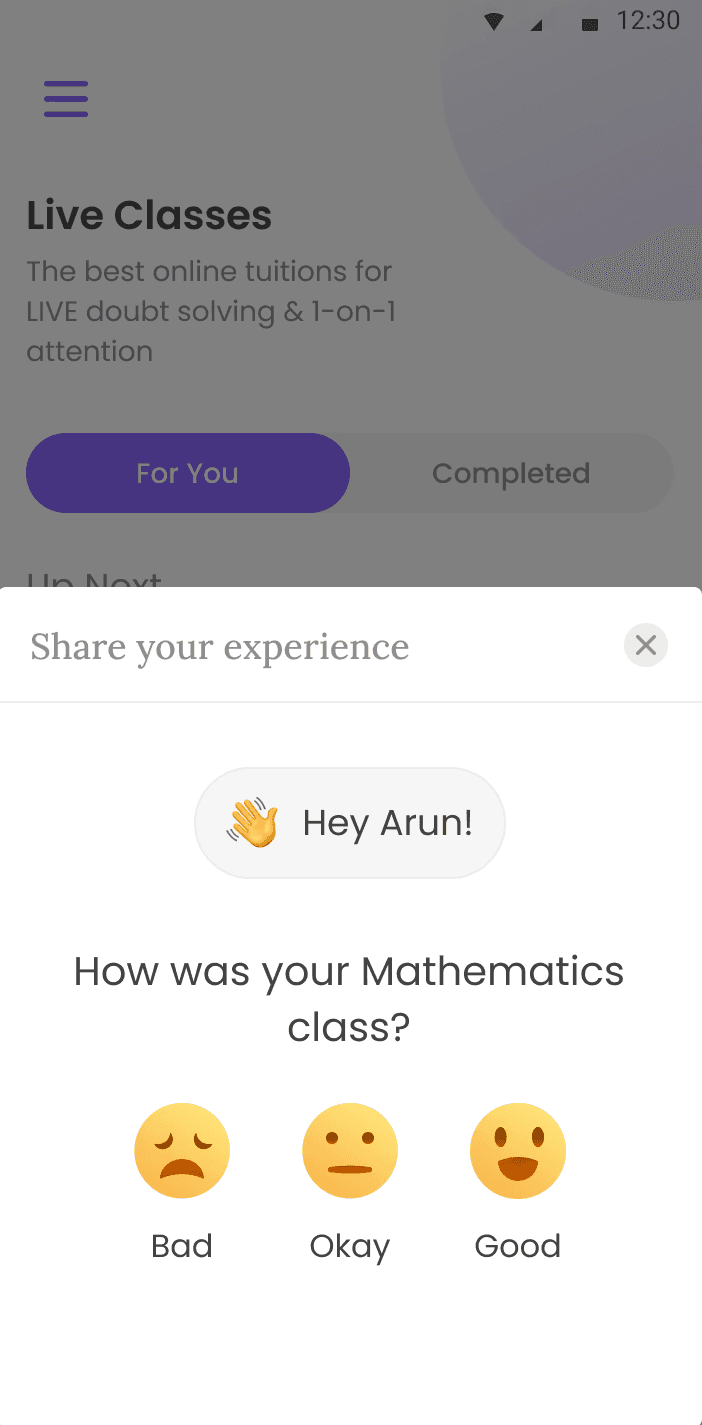
These are mock screens from multiple products within BYJU'S Classes, across desktop, mobile, and tablet.








Sparky is a persuasive talker and is always eager to help students.
His charismatic persona along with its outgoing behavior allows it to come out as a friend of the users.
It values connecting with people and is organized in its approach.
It is sensitive and idealistic and can seek approval from the users in certain scenarios.



The product aimed to drive participation and social interaction to strengthen user retention