(This one's feeling a little cramped on smaller screens.)
Please switch to a larger screen to view this case study.
How Gamification Became a Revenue Growth Engine

Sugarstrings.ai · Entrepreneurship · D2C
The Hardest Challenge, The Biggest Learning
1
Customers paid for a product they couldn't see, hoping they'd never need it, for an insight they couldn't verify, yet it could be life-saving.
2
Raising capital was essential to drive growth; despite its potential, this segment had yet to deliver strong investor returns in India was a challenge.
3
Its high ticket size created a perception of a premium product, with HNIs as the target and high acquisition costs.
Greatest Revenue Impact
The Context
Why I Started Up
Turning an intangible algorithm into a life-changing product that touches lives excites me.
I’ve always been drawn to building things from the ground up.
How I Added Value
Brought 0-to-1 product-building experience to a team.
Led the critical pivot toward a larger D2C opportunity from the initial direction.
Led Brand, Product & Service Design initiatives.
What led to my exit
Limited funding, high R&D needs, and long sales cycles were not sustainable.
High ticket sizes and reliance on HNI customers kept CAC high.
A shift in business priorities limited my growth ambitions.
Milestones
Early Pivot Toward
Preventive Healthcare
Early Research Revealed Greater
Potential in D2C Than B2B Diagnostics
Bootstrapped to
The First 100 Customers
Built a D2C Brand and Acquired the
First 100 Customers on a Lean Budget
Closed Seed Funding
& Hospital Partnerships
Led Fundraising Communications and Hospital Partnerships for Preventive Care
Product, Brand & the Service
Turning the Ghost Into a Tangible Product, and a Trustworthy Brand.
What sets HealthString by SugarStrings apart is its clinical accuracy and breadth, covering 1,000x more conditions than most consumer tests, yet they remain largely speculative.
But for most people, AI is a “black box”: it gives answers without showing how it reached them. That is where our challenge began.
Our first challenge was to give shape to something people can’t see or easily understand.
Branding, packaging, and the idea of what’s inside gave the invisible a form. Without them, it is just a ghost.


Branding
The brand was built to earn trust, not push sales. We wanted the science behind it to be rigorous, but the way we communicated it to feel simple, clear, and human.
It was an intentional design call to strip away the medical feel and create a brand for everyone, not just the doctor’s office.
DNA is a string of sugars. I extended that idea into the visual language, using the shared patterns and overlapping symptoms of genetic diseases as its foundation. From there, the visual grammar grew into categories that made a complex subject easier for people to understand.
Each visual cue came from something familiar: the cancer ribbon, the Korean heart sign, the full circle for bundled diseases, the overlapping shapes as parents in carrier diseases, and the pills for drug response.
The Service (A Macro View)
3 simple steps,
all from home.
Order the
kit online
Anytime Anywhere

Self-guided
sample collection
Register online,
& the rest is assured

Get results &
expert advice
Get clinical-grade report & free consultation
Behind it, the customer goes through a 30-day journey built around four key pieces
A hassle-free ordering & registration: Web and mobile experience.
Reliable logistics: Nationwide pickup and drop-off, with a premium customer experience.
Async support: Communication tactics to ensure correct swab collection and customer confidence.
Genetic report and post-result care: Genetic counselling, feedback, and referrals.
A memorable experience came down to two things: respecting the customer’s time and communicating with clarity.
Web Communication Touchpoints

We made sample collection feel easy with clear guidance, videos, and step-by-step instructions, reinforcing that it was simple enough for even a child to do.


No-BS Genetic Report
Most consumer DNA reports are 100+ pages long. This one puts the key result on page one, with deeper insights and clinical detail in under 20 pages. A premium, book-like format made the report feel valuable and built to last.
The report was the tangible expression of the product customers were paying for. Its design played a key role in shaping the brand.

The Challenge: Finding Product-Market Fit
Strong Targeting, Weak Sales Cycle
Our organic sales followed one clear pattern: a true urgency in their life triggered action. Many customers we had approached months earlier but couldn’t convert bought easily when a trigger came up, often for their whole family.
We reached people with the ability and motivation to buy, but the trigger often came from elsewhere, like a family member being diagnosed with cancer. This made the sales cycle long. The next step was to create urgency or target segments with natural triggers.

Campaigns were initially tested across four user segments to drive sales
Family history of diseases.
Those with unresolved health conditions.
Parents-to-be
Others (Affluent, proactive health seekers)
The Paradoxes of Value Perception and Doctors as Trust Proxies
The paradox of value perception becomes complex when the offering involves
Invisible (an algorithm and DNA)
The benefit is deferred and may never be needed.
Buying it can feel like a loss, not a gain.
The paradox of trusting the physician while making the technology behind the diagnosis understandable
Most physicians struggle to understand both the technology and the life-science nuance behind it, so they dismiss and discourage it.
Healthcare economics favours diagnosis and treatment over encouraging prevention.
Communication and service design focused on resolving these paradoxes
Explainability (User-facing communication)
Interpretability (Model-facing credibility by experts from medicine & AI tech)
Transparency (Process-facing trust and authenticity)
Testimonial (Assurance & social proof)
The Pivot: From Diagnostics to Prevention(D2C)
The ecosystem wasn’t ready
Market too small & yet crowded
Requires significant investment in infrastructure.
Doctors are the key catalyst for adoption, but winning their trust and buy-in requires deep training and education
The initial discovery was clear: the impact was significant, but high adoption risk and capital requirements made the model unviable. A D2C model opened up a much larger market.
The diagnostics product & service flow
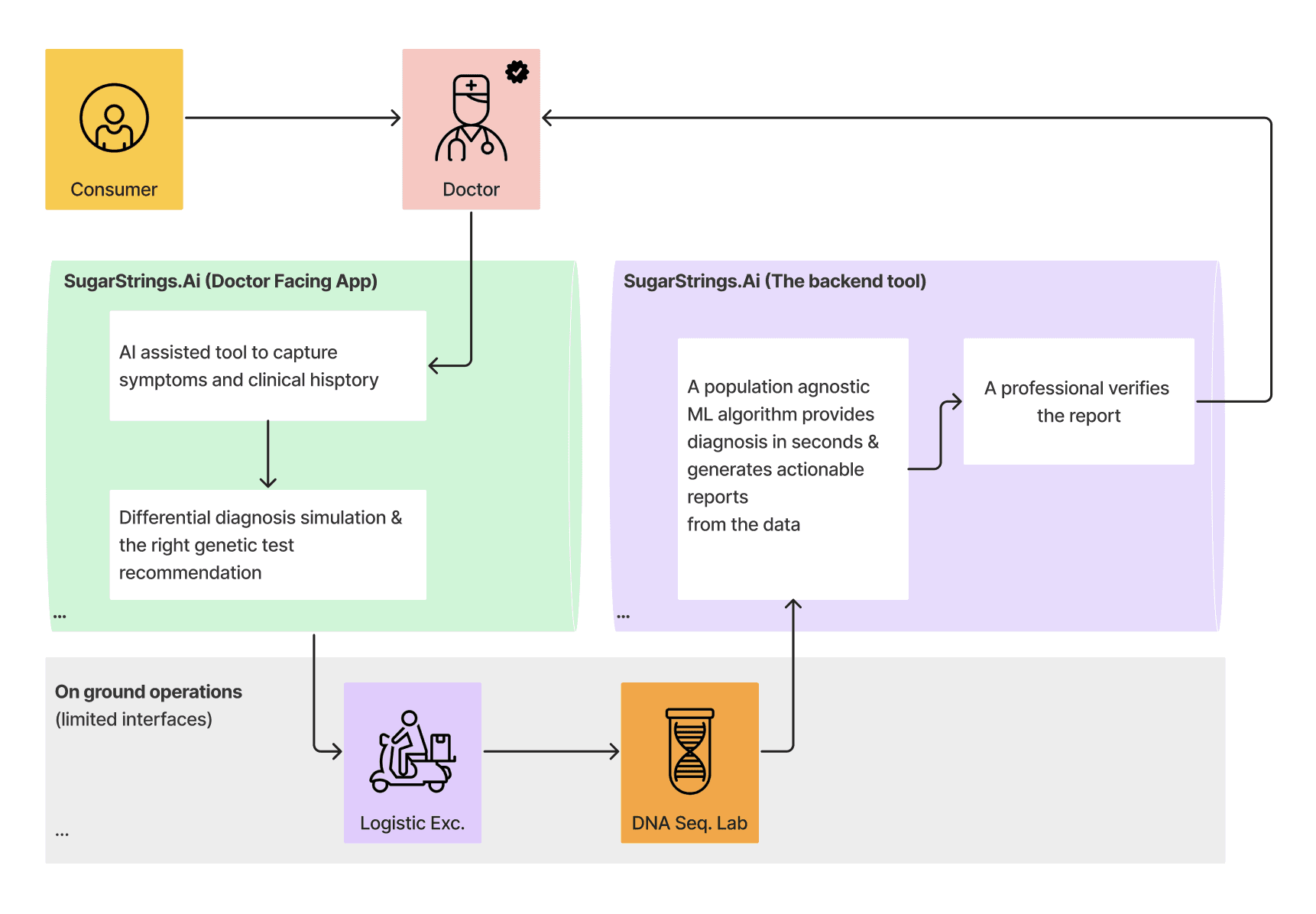
Only a few specialist doctors practised DNA-based diagnosis in India. High test costs and the potential for inconclusive results made the recommendation feel like a risk to their reputation.
The supporting logistics flow

The GTM & Growth
The Initial momentum
With initial capital raised, the growth plan was simple:
Create awareness: Introduce the brand through focused campaigns and deep, personal encounters with targeted audiences.
Capture demand: Reach people already seeking the product through partnerships with hospitals and labs.
The two hospital partnerships gave us the credibility and care network we needed to move confidently into D2C.
With preventive care and post-test treatment covered, we reached health-conscious consumers through targeted campaigns and health seminars across athletes, affluent communities, and HNI clubs.


Online and Offline Campaigns for Visibility, Awareness and Engagement
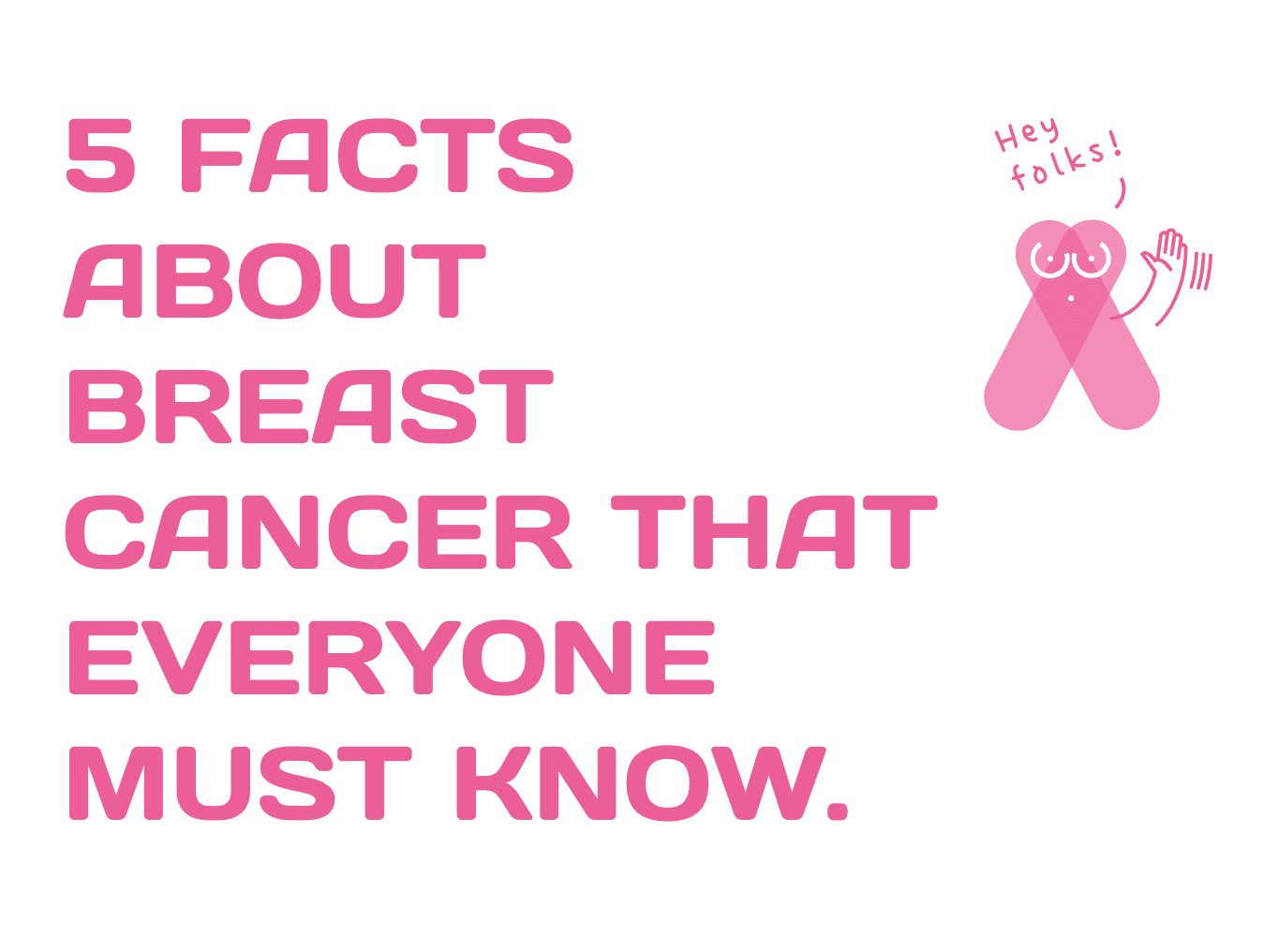
A campaign during Breast Cancer Awareness Month gained traction and conversions.

Awareness is a major barrier in preventive health. People pay little attention to anything that feels medical when they are healthy. The campaigns made preventive health feel everyday, relevant, and meant for everyone.
The Impact Created With the First 100 Customers
HealthString by SugarStrings stands out globally for its detection rate and breadth of coverage, with a significant lead over the next-best solution available today.


Gamification was the means, not the goal